
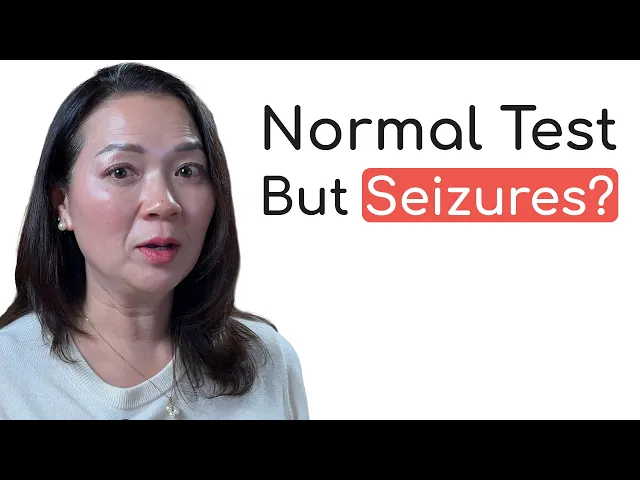
Seizures But Not Epilepsy: Why Some Teens Have Seizures With a Normal EEG

Dr. Jin Lee, PsyD
Seizures But Not Epilepsy: Understanding Functional Seizures in Teens
Some teens experience seizure-like episodes even though they do not have epilepsy. These episodes are called functional seizures and are a common symptom of Functional Neurological Disorder (FND). Unlike epileptic seizures, functional seizures are not caused by abnormal electrical activity in the brain but by disruptions in how the brain sends and processes signals.
Introduction
Few things are more frightening for parents than seeing their child have a seizure.
Many families rush to the emergency room expecting a diagnosis of epilepsy. But after testing — sometimes including multiple EEGs — they are told something confusing: the seizures are real, but they are not epilepsy.
For many parents, that moment creates even more questions.
How can someone have seizures if their brain scans and EEG results are normal?
In many of these cases, the episodes are functional seizures, which are a common symptom of Functional Neurological Disorder (FND). Understanding how these seizures happen can help families make sense of the diagnosis and begin to see a path toward recovery.
Why Seizures Can Happen Without Epilepsy
Epileptic seizures happen when there is abnormal electrical activity in the brain. These electrical changes can often be detected during an EEG.
Functional seizures are different.
In Functional Neurological Disorder, the brain’s structure is typically normal, and electrical activity may appear normal during testing. Instead, the problem lies in how the brain is functioning and communicating with the body.
The brain can become stuck in patterns that trigger seizure-like episodes even though there is no electrical seizure occurring in the traditional sense. That is why families are sometimes told their child’s seizures are “not epilepsy,” even though the episodes themselves look very real and alarming.
Why Functional Seizures Are Real Symptoms
One of the most important things parents need to understand is that functional seizures are real.
They are not imagined. They are not fake. And the teen is not choosing to have them.
Instead, the brain has developed patterns that trigger the body to respond in ways that resemble seizures. These patterns can develop after stress, illness, injury, or other disruptions that affect how the nervous system processes signals.
Once these patterns are learned, the brain may trigger them automatically. That’s why the episodes can appear suddenly and feel completely outside of the teen’s control.
Understanding that the symptoms are real — while also understanding that the brain can learn new patterns — is an important step toward recovery.
How Functional Seizures Fit Into FND
Functional seizures are one of the most common symptoms of Functional Neurological Disorder.
FND occurs when there is a disruption in how the brain and body communicate. This miscommunication can lead to a wide range of neurological symptoms even though the brain itself is structurally healthy.
Teens with FND may experience symptoms such as:
Seizure-like episodes
Weakness or paralysis
Dizziness or fainting
Movement problems
Vision changes
Brain fog or fatigue
All of these symptoms are real. But they occur because of how the brain is functioning rather than because of permanent damage.
That distinction is important, because it also means the brain can learn new patterns and improve.
“Functional seizures are real symptoms. The brain has learned patterns that trigger them, but those patterns can also be retrained.”
Conclusion
When a teen has seizures but doctors say it isn’t epilepsy, families often feel confused and unsure what to do next.
Functional seizures can be frightening, but they are a well-recognized symptom of Functional Neurological Disorder. Understanding what is happening in the brain can help families move from confusion toward clarity.
The most important thing to remember is that the brain is capable of learning new patterns. With the right approach and consistent recovery strategies, many teens are able to retrain the brain and regain confidence in their bodies.
For families facing this diagnosis, understanding functional seizures is often the first step toward recovery.
Share this
Comments
>No comments yet. Be the first!
Related Post

The Neuroscience of the Teenage Brain: Why Your Reward System Might Need an Upgrade
Neuroscientist Dr. Adriana Galván's research reveals why the teenage brain responds to rewards more intensely than adults — and Dr. Jin Lee explains how parents can use this science to build a reward system that actually works for teens with FND.
Read more

Science Shows: Your Teen's Brain Is Built for Change — And That's the Best News for FND Recovery
New research reveals the teenage brain is in its most powerful learning window ever. Dr. Jin Lee explains why this is game-changing news for families navigating FND recovery.
Read more

Why Your FND Teen's Brain Shuts Down During Stress (And What You Can Do About It)
Dissociation is one of the most common — and misunderstood — experiences in teen FND. Dr. Jin Lee breaks down the neuroscience behind why it happens and shares the one co-regulation step parents can use in the moment.
Read more