
Your Teen With FND Doesn't Want Help: What Parents Can Actually Do

Dr. Jin Lee, PsyD
Your teen with FND tells you they're okay. They don't need help. Just leave them alone.
But you can see what's happening. Maybe they're missing school, staying in bed, or quietly shrinking their world to avoid symptoms. Or maybe they're still going through the motions — attending school, seeing friends — but you can feel how much effort it takes and how much mental space FND is consuming.
So what do you do? Push harder until they agree to get help? Step back completely and wait until they're ready?
Neither.
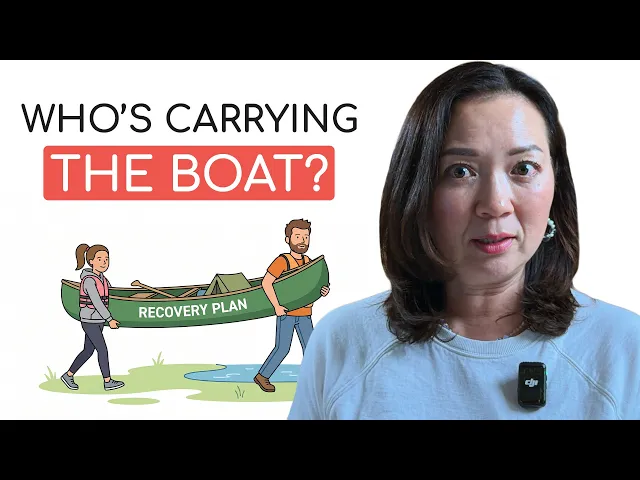
In this post, Dr. Jin Lee breaks down the concept of steady leadership — inspired by a conversation between Dr. Becky Kennedy and Andrew Huberman — and translates it directly into what parents of teens with FND can do when their teen isn't on board yet. The answer isn't more convincing, more arguing, or more rescuing. It's getting clear about your job as the parent.
Key Takeaways
Pushing harder when your teen refuses help almost always backfires — but abandoning your role as a parent isn't the answer either
Steady leadership means staying connected to yourself and your teen at the same time, holding boundaries while offering genuine empathy
The VP framework (Validate and Punt it back) gives parents a practical way to acknowledge their teen's struggle while returning responsibility to them
Parents have their own skills to practice — staying calm, validating without rescuing, and holding boundaries without arguing — and should start practicing before the hardest moments arise
The Step Zero Conversation helps families create a plan before crisis moments so no one is making decisions at 7:15 on a hard Monday morning
What Steady Leadership Actually Means
Dr. Becky Kennedy defines sturdy leadership as "an ability to be connected to yourself and to someone else at the same time." Dr. Lee calls it steady leadership in her work with FND families, and the principle is the same.
It means knowing your values, what you need, and what your job is — while simultaneously staying connected to your teen, who likely has very different wants and needs in the moment.
What it's not about is getting better at controlling your teen. It's about getting better at controlling what you do. Your teen can be frustrated. They can disagree. They can tell you they don't want help. And you don't have to panic, argue, or convince them. But you also don't disappear.
The Two Jobs Every FND Parent Has
Dr. Lee highlights two core responsibilities that steady leadership requires: boundaries and empathy.
A boundary is something you tell someone you will do — and it requires the other person to do nothing. A request, on the other hand, is about what you want your teen to do. Your teen can say no to a request. But a boundary is about what you are going to do as a parent.
This distinction changes everything. Steady leadership isn't figuring out the perfect way to make your teenager comply. It's getting clear about what your job is, what you're willing to do, and what you're not going to keep doing.
And here's the part that surprises many parents: boundary and empathy are not opposites. You can say, "I believe you. I know this is really hard" — and still stay grounded in the plan you've already made. You don't have to choose between the two.
The VP Framework: Validate and Punt It Back
One of the practical strategies Dr. Lee teaches families is called VP — Validate and Punt it back.
It sounds like this: "I believe you. This is really hard. I hear you." That's the validate. Then: "What are you doing to help yourself?" That's the punt.
This approach doesn't force. It doesn't rescue. And it doesn't pretend the problem isn't there. It gives responsibility back to your teen inside a structure that you're still helping to hold.
Importantly, this is very different from saying, "I hear you, but we talked about the plan, so you're going to have to do it." That's still trying to control the outcome. The VP framework creates space for your teen to practice their own problem-solving.
Your Teen's Voice vs. Full Responsibility
Some parents land in a place of, "Well, it's their body. I can't make them do anything. I guess I just have to wait until they're ready."
What families Dr. Lee has worked with often discover is that having a voice in recovery is completely different from carrying the full responsibility for a life-altering decision. That's a lot to put on a teenager whose brain and body are already struggling to communicate effectively.
The goal isn't to drag your teen through recovery. It's also not to hand them the steering wheel entirely. It's a balance — don't push, don't abandon.
Start With Your Own Skills
When parents say, "My teen isn't using their skills," Dr. Lee's response is almost always: "What about your skills?"
Parent skills might look like staying calm when symptoms show up, validating without rescuing, not asking ten questions about symptoms, or holding a boundary without getting pulled into an argument. These skills take practice — just like the skills teens need to develop.
And here's the critical piece: you need to practice before the hardest moments. Figuring out what to say at 7:15 on a Monday morning when your teen won't get out of bed — that's too late.
The Step Zero Conversation
This is why Dr. Lee teaches what she calls the Step Zero Conversation. Before any hard moment arrives, you talk through the plan. What am I going to say? What am I not going to do? What is my teen's job? What is my job? What plan are we following?
When the hard moment comes, you have something to fall back on. Over time, something important starts to happen. Your teen begins taking more responsibility because you've created a safe space for them to try — and even make mistakes — while they're learning.
Leading So They Can Lead Themselves
The goal of steady leadership isn't to lead your teen's recovery forever. It's to empower both you and your teen at the same time. You lead yourself so they can learn to lead themselves.
Early on, you may need to provide more structure. Then your teen learns, practices, builds confidence, and gradually you hand more responsibility back — until they can say, "I think I know what to do. I can handle this."
If you're sitting here thinking, "What can I possibly do?" — remember this: back off from trying to convince, control, or rescue. But don't back away from your job as their parent. Stay connected. Validate. Know the difference between a request and a boundary. Practice your own skills consistently.
You don't have to wait for your teen to change before you start changing how you respond. That's not controlling your teen. That's steady leadership.
If you're looking for a clear, structured recovery plan and the coaching support to practice these skills, visit teenfndacademy.com to learn more about how the program works and whether it might be a good fit for your family.
References
Dr. Becky Kennedy and Andrew Huberman, "Protocols for Excellent Parenting & Improving Relationships" View source
Share this
Comments
>No comments yet. Be the first!
Related Post
FND Recovery Isn’t Linear: Why Symptoms Can Return
Flare-ups during Functional Neurological Disorder recovery can feel terrifying. Here’s why they happen—and how teens keep making progress.
Read more

FND Treatment Explained: How Teens Retrain the Brain for Recovery
When a teen is diagnosed with Functional Neurological Disorder, parents often ask what treatment actually works. Understanding how the brain retrains new patterns is the key to recovery.
Read more

FND Recovery Isn’t About Eliminating Symptoms
Many parents focus on stopping symptoms first. But real recovery from Functional Neurological Disorder happens when teens rebuild normal functioning and retrain the brain.
Read more