
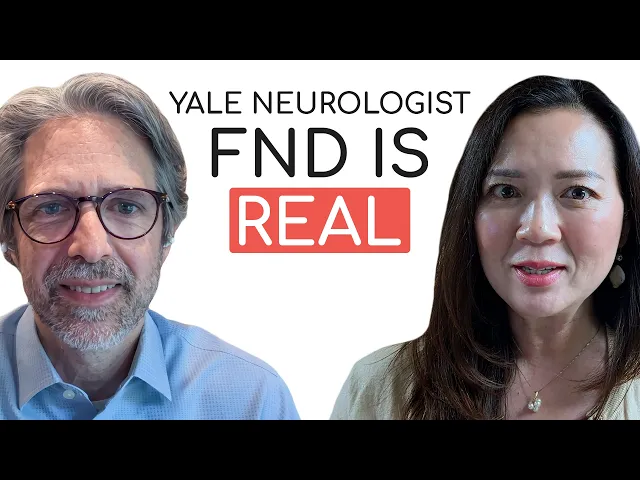
Why Functional Neurological Disorder Is So Often Misunderstood — A Yale Neurologist Explains

Dr. Jin Lee, PsyD
By the time most families land in a specialist's office, they have already seen dozens of doctors, endured countless tests, and received very few real answers. Many arrive exhausted, mistrustful, and carrying what can only be described as medical trauma.
So what happens when the specialist they finally see is someone who not only understands Functional Neurological Disorder — but has lived the mind-body journey himself?
Dr. Jin Lee sat down with Dr. Dario Zagar, a Yale University neurologist and founding member of the Functional Neurological Disorder Society, to unpack why FND remains the most stigmatized condition in neurology, why treating symptoms one by one keeps families stuck, and what recovery actually looks like when you stop chasing symptom elimination and start retraining the brain.
With over 20 years of clinical experience — and a personal story that started with his own unexplained back pain in his twenties — Dr. Zagar brings a rare combination of professional expertise and genuine empathy to this conversation.
Key Takeaways
FND is a neuroplastic symptom — a software problem in the brain, not structural damage — and it often co-occurs with chronic pain, POTS, and other conditions that share the same root.
Treating each symptom separately keeps families on a merry-go-round. Recovery requires addressing the underlying brain-body miscommunication, not chasing individual symptoms.
FND is diagnosed through positive clinical signs on examination, not just the absence of findings on tests — it is not a diagnosis of exclusion.
Recovery is not about symptom elimination. It is about improving function, building self-awareness, and developing the empowerment to handle life's ups and downs.
An estimated 40% of general neurology patients may have a neuroplastic symptom, yet most providers receive minimal training on how to recognize or explain these conditions.
The Whack-a-Mole Trap Most Families Fall Into
Here is a pattern that families I've worked with know all too well: one symptom improves, another appears. A new specialist is consulted. A new test is ordered. And the cycle continues.
Dr. Zagar describes this as the "whack-a-mole game" — and he sees it constantly. Each symptom gets its own name, its own specialist, and its own treatment plan. But when you treat the smoke without addressing the fire, the smoke just moves.
The fire, as Dr. Zagar explains, is a miscommunication between the brain and the body. Whether the symptom shows up as pain, weakness, dizziness, fatigue, or functional seizures, the underlying issue is the same: the brain is misprocessing information from the body. This is what makes FND a neuroplastic symptom — a software problem, not a hardware one.
Why FND, Chronic Pain, POTS, and EDS Often Travel Together
One of the most important points Dr. Zagar raises is that FND rarely shows up alone. What we often see is a constellation of symptoms — chronic pain, digestive issues, POTS, sleep problems, fatigue, and sometimes a diagnosis of Ehlers-Danlos Syndrome (EDS) — all occurring in the same person.
This is not a coincidence. These conditions frequently share neuroplastic roots, and viewing them through separate lenses keeps families from seeing the bigger picture.
Dr. Zagar also cautions against getting stuck on incidental findings from imaging. Finding something on an MRI — a pineal cyst, a Chiari malformation, white matter changes — is exceedingly common in healthy people. Without a knowledgeable provider to put these findings in context, families can spend months chasing a red herring.
How FND Is Actually Diagnosed
A common misconception is that FND is a "wastebasket" diagnosis — meaning doctors only land on it when they cannot find anything else. Dr. Zagar is clear that this is not the case.
FND is diagnosed based on positive clinical signs found during a neurological examination. These include specific patterns of weakness, characteristic movement abnormalities, and responses to distraction techniques. For functional seizures, capturing an event on video or EEG can provide additional confirmation.
The diagnosis does not require a history of mental health conditions. As Dr. Zagar puts it, FND can be diagnosed in someone with zero mental health history. Depression or anxiety may be present, but they are not what drives the diagnosis.
What Recovery Actually Looks Like
This is where the conversation becomes especially meaningful for parents. Dr. Zagar is direct: recovery is not about perfection, and it is not about making every symptom disappear forever.
What we often see is that families who define recovery as "no more symptoms" inadvertently add pressure that makes the situation harder. Recovery is a process — sometimes a lifelong one — of building self-awareness, understanding what your symptoms are telling you, and learning to respond differently.
Dr. Zagar identifies two essential ingredients for recovery: empowerment and self-awareness. Empowerment begins with education — understanding what FND is and why it happens. Self-awareness means learning to recognize the patterns, triggers, and perpetuating factors that keep the nervous system stuck.
He also makes an important distinction that families often miss: some people see their symptoms improve but their world stays small because fear still runs the show. Others may still experience symptoms but have fully re-engaged with their lives. Function and agency matter more than symptom counts.
The Stigma Problem — And Why It Is Changing
Dr. Zagar does not shy away from naming FND as perhaps the most stigmatized condition in all of neurology. Because there is no blood test or scan that shows it on a screen, families are often left feeling dismissed or disbelieved.
But he is quick to point out that this stigma comes from a lack of knowledge, not a lack of caring. Most providers simply were never trained to recognize, diagnose, or explain FND. The good news is that this is changing. Organizations like the Functional Neurological Disorder Society are growing rapidly, conferences that once drew 30 attendees now draw hundreds, and the mind-body medicine movement is reaching more providers and families every year.
There Is a Way Forward
Dr. Zagar's message to families is one of honest hope: because FND is not caused by structural damage, the brain has a real capacity to change. This process is built to help families understand what is happening, build the skills to move forward, and reclaim the life that FND has put on hold.
It is not a simple fix. There is no single pill or surgery. But with knowledge, persistence, and a compassionate team, recovery is possible.
If you are ready to take the next step toward helping your teen move forward, visit teenfndacademy.com to learn how families are navigating this journey together.
Share this
Comments
>No comments yet. Be the first!