

Why Your FND Teen's Brain Shuts Down During Stress (And What You Can Do About It)

Dr. Jin Lee, PsyD
Have you ever watched your teen go completely blank mid-sentence — eyes open but nobody quite home — and felt that surge of panic? Is it a seizure? ADHD? Something even more serious?
If your teen has Functional Neurological Disorder (FND), there's another possibility most parents have never been told about. It's called dissociation, and it's one of the most common yet deeply misunderstood experiences in FND.
Dissociation isn't your teen acting out. It isn't psychosis. Backed by research, it's actually one of the oldest, most wired-in protective responses in the human nervous system. Your teen's brain isn't broken — it's doing exactly what it was built to do, just at the wrong time and far too often.
Dr. Jin Lee breaks down exactly what dissociation is, how common it is based on a major systematic review of 75 studies, why it happens according to the defense cascade model, and the one co-regulation step you can use the very next time you see it.
Key Takeaways
Dissociation is not a choice. It's a deeply wired nervous system response — not weakness, not acting out, and not something your teen can simply snap out of.
Research confirms it's extremely common in FND. A 2022 review of 75 studies found dissociation levels in FND are significantly higher than in any other neurological condition.
Co-regulation is the most powerful tool in the moment. A calm voice and simple words can help your teen's nervous system find its way back.
This is not permanent. Through consistent brain retraining, the nervous system can relearn what safety feels like.
What Dissociation Actually Looks Like in FND
Dissociation can be confusing to witness because on the surface, it can resemble other conditions. Your teen might appear to zone out, feel disconnected from reality, or even seem like a different person entirely.
Researchers describe dissociation as a loss of control or awareness over mental or physical processes that a person would normally manage without effort. In plain language, part of your teen's mind or body stops checking in with the rest of them — even if only for a moment.
What's important to understand is that dissociation is not here to replace other possibilities like absence seizures, attention difficulties, or psychotic episodes. Those are all worth a proper medical workup. Dissociation can exist alongside other conditions or show up entirely on its own.
Two Types of Dissociation in FND
Researchers break dissociation into two categories, and both matter for understanding what your teen is going through.
Psychoform dissociation covers the mental side — gaps in memory, feeling disconnected from your own sense of self, or the world around you not feeling quite real. Many teens describe this as things just "not feeling real."
Somatoform dissociation covers the body — sudden numbness, loss of feeling in an arm or leg, weakness, or movements that happen without your teen choosing them.
Both types can show up in FND, sometimes simultaneously, and understanding this distinction helps parents recognize what's happening rather than jumping to worst-case scenarios.
What the Research Actually Shows
In 2022, Campbell and colleagues published a systematic review that examined 75 separate studies on dissociation in FND. Those studies included close to 4,000 people with FND and over 3,000 without it.
The findings were striking. People with FND showed both psychoform and somatoform dissociation at levels far higher than people without FND. This held true whether compared with healthy individuals or with people who had other neurological conditions.
The review also found that dissociation was connected to more severe FND symptoms overall and a lower quality of life. It's worth noting that most of these studies were conducted with adults rather than teens — pediatric FND research still has a long way to go. However, the pattern is consistent and strong enough to inform what we see clinically in younger populations.
Why the Brain Does This: The Defense Cascade
Every human nervous system comes equipped with an automatic threat response — it's how we survive. When the body senses danger, whether real or perceived, it moves through a set order of responses. First comes heightened alertness. Then the body may shift toward fight or flight.
But sometimes fighting isn't an option, and running isn't either.
This is where the defense cascade model becomes so important. Research by Kozlowska and colleagues describes what happens when active defense isn't possible: the body shifts into a still state — like a deer caught in headlights. A person can remain upright, eyes open, and seemingly present while their mind actually separates from their body.
This maps directly onto the psychoform and somatoform dissociation categories. Specific areas of the brain responsible for keeping a person feeling connected to their own body and environment essentially shut down.
This is not weakness. This is not your teen trying to get out of something. It is one of the most ancient protective patterns in neuroscience — just firing at the wrong time and too frequently.
The One Co-Regulation Step You Can Use Right Now
When your teen dissociates, the goal is not to snap them out of it with pressure or frustration. The goal is co-regulation — using your own calm state to help their nervous system find its way back.
What does this look like? Use a calm, steady voice — slower and lower than usual — with short, familiar words:
"Hey, I'm here. You're safe. You're okay. I'll be here when you're back."
That's it. It may feel like you're not doing much, but you're actually serving as a surrogate nervous system, helping your teen's brain borrow your calm and slowly return to the present moment.
This Is Not a Life Sentence
Here's the bigger picture that matters most: a nervous system state is not permanent. This is where neuroplasticity — the brain's ability to change and reorganize itself over time — becomes the source of genuine hope.
Through consistent nervous system regulation practice, a teen's system can work toward a genuine reset. This isn't about forcing anything through willpower. In fact, what families often see is that trying to fight against the state tends to keep a teen stuck in it longer.
It's about steady, repeated brain retraining practiced consistently over time — helping the nervous system relearn what safety actually feels like, inside and out.
This kind of structured, step-by-step nervous system work is exactly what families go through inside Teen FND Academy. If you're looking for a clear place to start, visit teenfndacademy.com to learn more about how the program is helping families move from survival mode toward real recovery.
References
Campbell, M. C., Smakowski, A., Rojas-Aguiluz, M., Goldstein, L. H., Cardeña, E., Nicholson, T. R., Reinders, A. A. T. S., & Pick, S. (2022). Dissociation and its biological and clinical associations in functional neurological disorder: systematic review and meta-analysis. BJPsych Open, 9(1), e2. View study
Kozlowska, K., Walker, P., McLean, L., & Carrive, P. (2015). Fear and the defense cascade: Clinical implications and management. Harvard Review of Psychiatry, 23(4), 263–287. View study
Share this
Symptom Focused
Comments
>No comments yet. Be the first!
Related Post
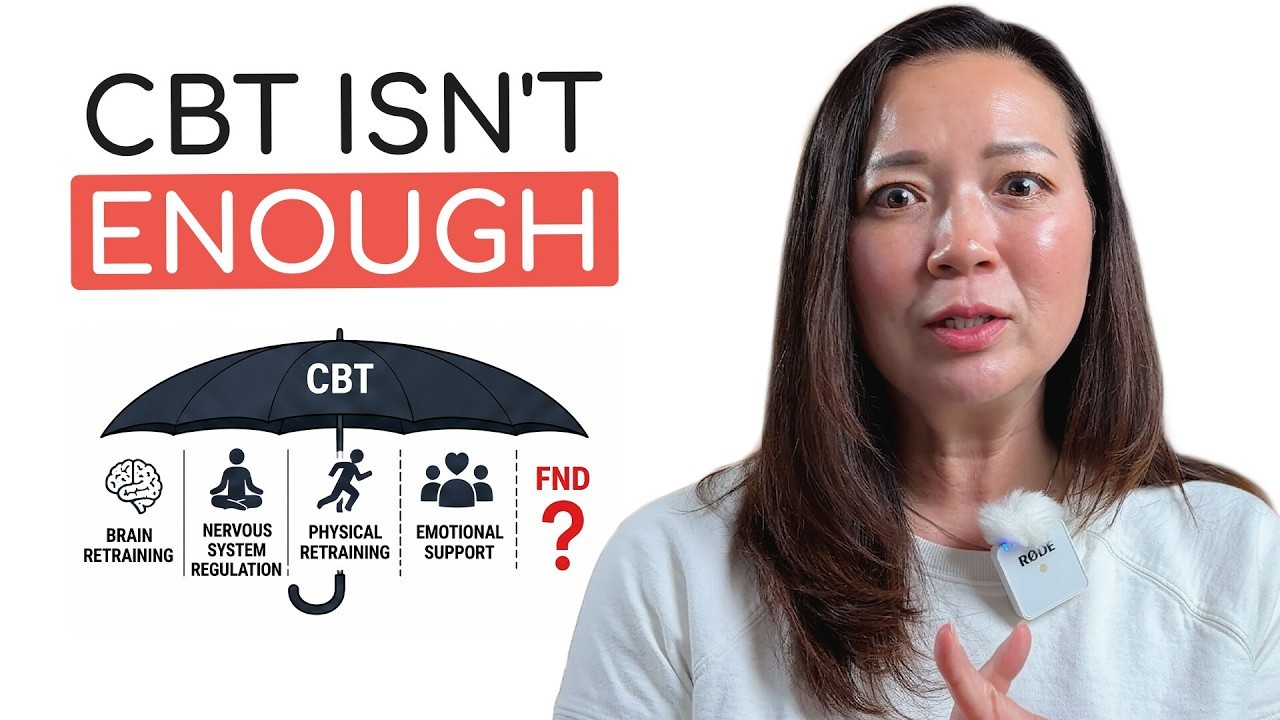
What a Harvard Review Revealed About Full FND Recovery — And Why CBT Alone Keeps Families Stuck
A 2023 Harvard Review of Psychiatry study found that 63 to 95% of children with FND achieve full symptom resolution when all three layers of recovery are addressed — not just CBT alone. Here's what that means for your family.
Read more

Why "Validating Feelings" Backfires: What FND Parents Need to Know About Holding Space
Validating your teen's feelings during an FND flare sounds like the right move — but if your mindset is still about making it stop, it can backfire. Dr. Jin Lee breaks down what holding space actually looks like for FND families.
Read more

Why Treating POTS and FND Separately Is Keeping Your Teen Stuck
If your teen has both POTS and FND, treating them as separate conditions with separate specialists may be the very thing keeping them stuck. Here's what the latest research says about the nervous system connection driving both.
Read more