
What Harvard Research Actually Says About FND Recovery in Teens (Real Numbers)

Dr. Jin Lee, PsyD
You've done everything right. The doctors, the physical therapy, the counseling, the supplements, the late-night searches. And your teen is still stuck on the couch, still missing school, and your whole family is still planning each day around FND symptoms.
So when someone says there's one more thing to try, you're right to ask: Why would this be any different?
That's a wise question. And it deserves an answer grounded in actual research — not vague promises.
Dr. Jin Lee breaks down three of the biggest questions parents of teens with FND are quietly carrying: Can my teen actually get better? Does the best care have to happen in a hospital? And what about the cost?
The answers may surprise you — and they come with real numbers.
Key Takeaways
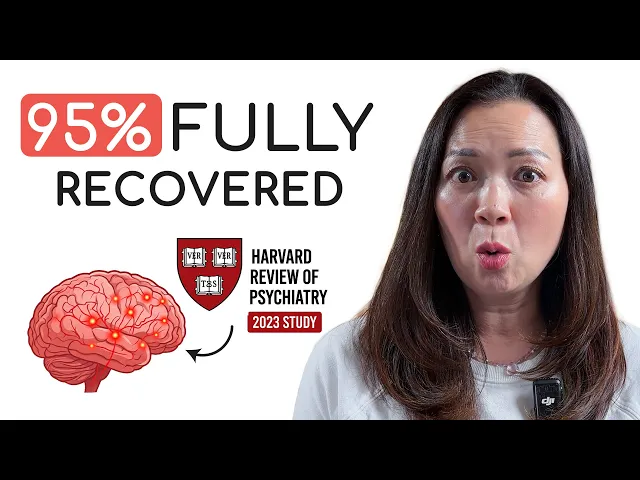
Research published in the Harvard Review of Psychiatry found that 63 to 95% of children with FND had full symptom resolution when the right elements were in place
Successful recovery plans shared three things: a clear diagnosis, family education about how FND works, and a whole-child approach focused on returning to daily life
Most FND recovery happens at home between visits — not during a one-hour appointment — which is why parent support and a clear roadmap matter so much
Can Teens With FND Actually Get Better?
The short answer is yes. Many can.
In 2023, Dr. Kozlowska and her team published a paper in the Harvard Review of Psychiatry examining mind-body care for children and teens with FND. In the studies they reviewed, 63 to 95% of children with FND experienced full symptom resolution.
Those are hopeful numbers. But they don't mean every child gets better in the same way or at the same speed. And they don't point to one magic tool.
What the research does show is that certain things appeared again and again in every successful recovery plan.
What Every Successful Recovery Plan Had in Common
Across the studies, three elements consistently showed up:
The child had a clear diagnosis.
The family learned how FND works.
The plan addressed the whole child and helped them move back toward daily life.
That last piece matters deeply. FND recovery is not about waiting for every symptom to disappear before a teen starts living again. What we often see is that getting back to safe daily life is actually part of how the brain begins to retrain — which leads to recovery.
The Two-Oar Problem
Dr. Lee often uses the image of a boat with two oars to explain why so many hardworking families feel stuck.
The first oar is doing helpful things — physical therapy, counseling, working on sleep, exercise, and returning to school. Most families already have this oar and have been pulling on it as hard as they can.
The second oar is understanding how all of those steps fit together — and knowing what to do when symptoms show up at home, or even before they show up.
When a family only has one oar, they can work incredibly hard and still go in circles. That doesn't mean anyone failed. It simply means no one gave the family a clear map.
Does the Best FND Treatment Have to Happen in a Hospital?
Hospital programs can be wonderful. Some teens genuinely need that higher level of care with a full team around them.
But hospital care is not the only path — and for many families, it's not accessible.
A 2024 study by Watson and colleagues published in Pediatric Neurology found just 31 pediatric FND treatment settings across only 16 states in the U.S. All were in urban areas. None were in rural communities. Many had very limited capacity, and some had wait lists stretching close to a year or longer.
Less than one-third of those programs offered any form of online care.
For families outside the U.S. — in Canada, Europe, Asia, and beyond — access challenges can be just as significant.
Recovery Happens Between Visits
Here's something that stood out in the research: every hospital program gave families a plan for what to do after the child left. Most also said families could return if needed.
That tells us something important. Even the best hospital teams know that recovery carries over into daily life. A teen still has to come home, return to school, and use skills in real-world moments.
Most recovery doesn't happen during a one-hour office visit. It happens on a hard school morning, during dinner, and when symptoms flare right before bed. This is where families often feel lost — trying to connect the pieces from different providers without a clear roadmap.
Support at home doesn't mean replacing medical care. It means helping the family understand the plan, respond to symptoms with confidence, and support a safe return to daily life.
What About the Cost?
This question can feel hard to say out loud, but it matters.
A 2023 systematic review published in the journal Neurology examined the economic cost of functional neurological disorders. The findings were clear: FND carries significant costs for both families and the healthcare system over time.
There are direct costs like medical visits, tests, and hospital stays. And then there are indirect costs — missed work, lost pay, travel, and the hours a parent cuts because their teen can't be left alone. Insurance rarely covers all of it.
Interestingly, that same review found that giving a person a clear diagnosis and a thorough explanation of FND may actually lower healthcare costs. When families don't understand the diagnosis, they understandably keep searching — test after test, specialist after specialist. Once there's a clear map, families can make better choices about what comes next.
Finding the Right Next Step
There is no single magic program for every teen. Some need hospital care. Some can access treatment closer to home. And some families need education, coaching, and support to put the plan into action in daily life.
The goal isn't to find the fanciest program. It's to build a plan that makes sense for your family, gives you clear steps, and helps your teen's world grow again.
If you've already tried many things, please don't blame yourself. You did the best you could with the map you had — or the map you weren't given. Your teen is not broken, and you are not a bad parent. The fact that things haven't worked yet does not mean nothing will.
If you're ready to explore what a structured, family-centered approach to FND recovery looks like, visit teenfndacademy.com to learn how families from around the world are building their recovery plans — together.
References
Kozlowska, K., Chudleigh, C., Savage, B., Hawkes, C., Scher, S., & Nunn, K. P. (2023). Evidence-based mind-body interventions for children and adolescents with functional neurological disorder. Harvard Review of Psychiatry, 31(2), 60–82. View study
O'Mahony, B., Nielsen, G., Baxendale, S., Edwards, M. J., & Yogarajah, M. (2023). Economic cost of functional neurologic disorders: A systematic review. Neurology, 101(2), e202–e214. View study
Watson, M., Kreuzman, J., Zeribi, K., Iskander, J. M., Hopper, A., Simon, L., Chesley, G., & Fobian, A. (2024). The current state of pediatric functional neurological disorder treatment in the United States. Pediatric Neurology, 158, 144–155. View study
Share this
Comments
>No comments yet. Be the first!
Related Post
FND Recovery Isn’t Linear: Why Symptoms Can Return
Flare-ups during Functional Neurological Disorder recovery can feel terrifying. Here’s why they happen—and how teens keep making progress.
Read more
Seizures But Not Epilepsy: Why Some Teens Have Seizures With a Normal EEG
Seeing your teen have seizures is terrifying. But when tests show normal brain activity, the diagnosis may be functional seizures related to Functional Neurological Disorder (FND).
Read more

FND Treatment Explained: How Teens Retrain the Brain for Recovery
When a teen is diagnosed with Functional Neurological Disorder, parents often ask what treatment actually works. Understanding how the brain retrains new patterns is the key to recovery.
Read more