
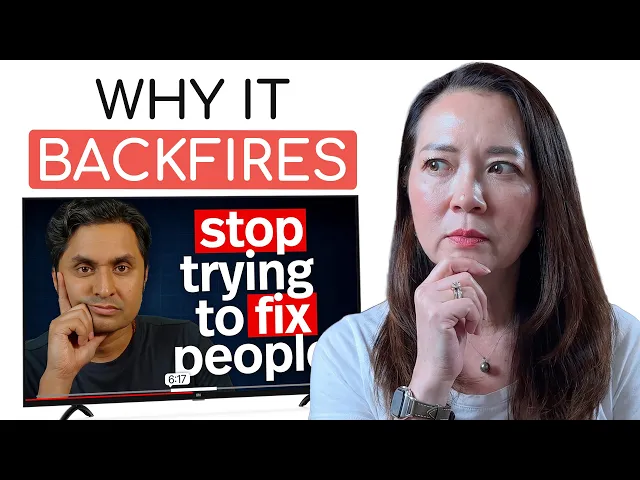
Why "Validating Feelings" Backfires: What FND Parents Need to Know About Holding Space

Dr. Jin Lee, PsyD
Your teen is mid-flare — maybe it's a seizure, maybe it's an emotional meltdown — and you're doing everything you can think of. You're asking what's wrong. You're telling them they're safe. You're scanning for the cause and trying to make it stop.
And somehow, despite all of that effort, it's not landing. If anything, it might be making things worse.
This is one of the most painful and confusing experiences FND parents describe. In this post, Dr. Jin Lee reacts to Harvard-trained psychiatrist Dr. K's breakdown of why our instinct to validate and fix actually backfires — and translates every insight directly into what it means for families navigating Functional Neurological Disorder.
You'll learn about the emotional umbilical cord, why validating from the wrong mindset is really just another form of fixing, and what holding space actually looks like when your teen is struggling — because it looks nothing like doing nothing.
Key Takeaways
Trying to fix or validate your teen's emotions during a flare often makes things worse when the underlying goal is still to make the distress stop.
The "emotional umbilical cord" means your nervous system absorbs your teen's distress — and your own discomfort drives the urge to intervene.
Holding space is intentional inaction, not doing nothing — it means regulating yourself first and connecting without an agenda to correct.
Resilience only builds when your teen is allowed to struggle while you stay steady and present beside them.
The Emotional Umbilical Cord: Why Their Distress Becomes Yours
Dr. K introduces a concept he calls the "emotional umbilical cord" — the idea that when someone near us experiences a negative emotion, we absorb some of that emotion through our own nervous system. It's essentially what mirror neurons do. It's empathy in action.
For FND parents, this is amplified. You're not watching a fictional character on a screen. You're watching your child convulse, collapse, or spiral — and your nervous system is taking all of that in.
What families I've worked with often discover is that the urgency to fix, to intervene, to find answers in that moment isn't actually driven by what their teen needs. It's driven by their own inability to tolerate the distress they're absorbing. That's not a flaw — it's biology. But recognizing it changes everything.
Why Fixing and Validating Are Doing the Same Thing
Here's where it gets counterintuitive. Most parents learn that instead of jumping in to rescue, they should validate their teen's feelings. And on the surface, that's good advice — it's something Dr. Lee teaches regularly.
But there's a critical distinction. If you're validating with the mindset of "let me say the right thing so my teen feels better and this stops," you're not actually validating. You're still fixing — just with different words.
The words might sound like connection, but the energy behind them is still about making the discomfort go away. Your teen can feel that difference, even if they can't articulate it. As Dr. Lee often explains, you need to row the boat with both arms — the right words and the right mindset — or you'll just go in circles.
What Holding Space Actually Looks Like
Dr. K describes holding space as "intentional inaction" — and that phrase is worth sitting with. It doesn't mean doing nothing. It means deliberately not doing the things you'd normally rush to do: interrogating, problem-solving, rescuing, correcting.
Think of it like holding a pen. You're not writing with it. You're not putting it down. You're just holding it. It's an active choice that requires effort and presence.
For FND families, this can look like staying in the room while your teen has an episode — not scrambling for solutions, not peppering them with questions, not frantically Googling the next specialist. Instead, you're creating a container of mental, emotional, and sometimes physical safety where your teen is allowed to feel what they're feeling.
What families I've worked with often hear from me is this: your job is not to stop the smoke. FND symptoms are smoke — they're the brain and body miscommunicating. Chasing each individual symptom with another doctor or another supplement doesn't address the fire underneath. Holding space means staying focused on what actually matters.
The Two-Step Framework: Pause and Regulate
So what do you actually do in those moments? Dr. Lee uses a two-step framework with every family:
Step one: Pause and regulate yourself. When you see your teen struggling, your first job is your own nervous system. Maybe that's a grounding technique, a breathing exercise, or even silently counting down from five. It might look like you're doing nothing — but you're working hard internally to stay regulated.
Step two: Validate without strings attached. Once you're regulated, you can offer genuine validation. Something as simple as "Yeah, that really sucks" — said without an agenda to make them feel better faster. You're communicating: I can handle this. I can stay here with you. I don't have a solution, but I'm not going anywhere.
That's what holding space looks like in practice. It's not cold. It's not passive. It's one of the hardest things a parent can do.
Connecting Instead of Correcting
The instinct to correct is strong — especially when you can see what your teen "should" be doing differently. But correcting, even when it comes from love, pushes your teen away. Connecting pulls them closer.
And connecting doesn't mean connecting so that you can eventually steer them toward a solution. It means being present with no ulterior motive. When your teen feels that kind of presence, it builds something that no amount of problem-solving can: trust that they can struggle and survive it.
Why Resilience Requires Struggle
This is the part that's hardest to hear. Resilience doesn't build in comfort. It builds in the face of adversity — when your teen encounters a problem and, with practice, learns to recognize it and respond to it on their own.
If you're always jumping in to solve, your teen never gets that opportunity. They may feel temporarily better, but they don't build the self-efficacy and confidence that come from navigating hard things themselves.
The one exception? When your teen explicitly asks for help brainstorming, or when you've proactively built a plan together ahead of time. Following a plan you created as a team is very different from scrambling to find a solution in the moment.
A Different Path Forward
None of this means you're a bad parent for wanting to help. The instinct to protect your child is one of the most powerful forces in the world. What we're talking about is channeling that instinct in a way that actually serves your teen's long-term growth and recovery.
If you're ready to learn how to move from reactive to regulated — and to understand how this framework fits into a comprehensive approach to FND — visit teenfndacademy.com to learn how families are helping their teens get their lives back.
Share this
Comments
>No comments yet. Be the first!
Related Post
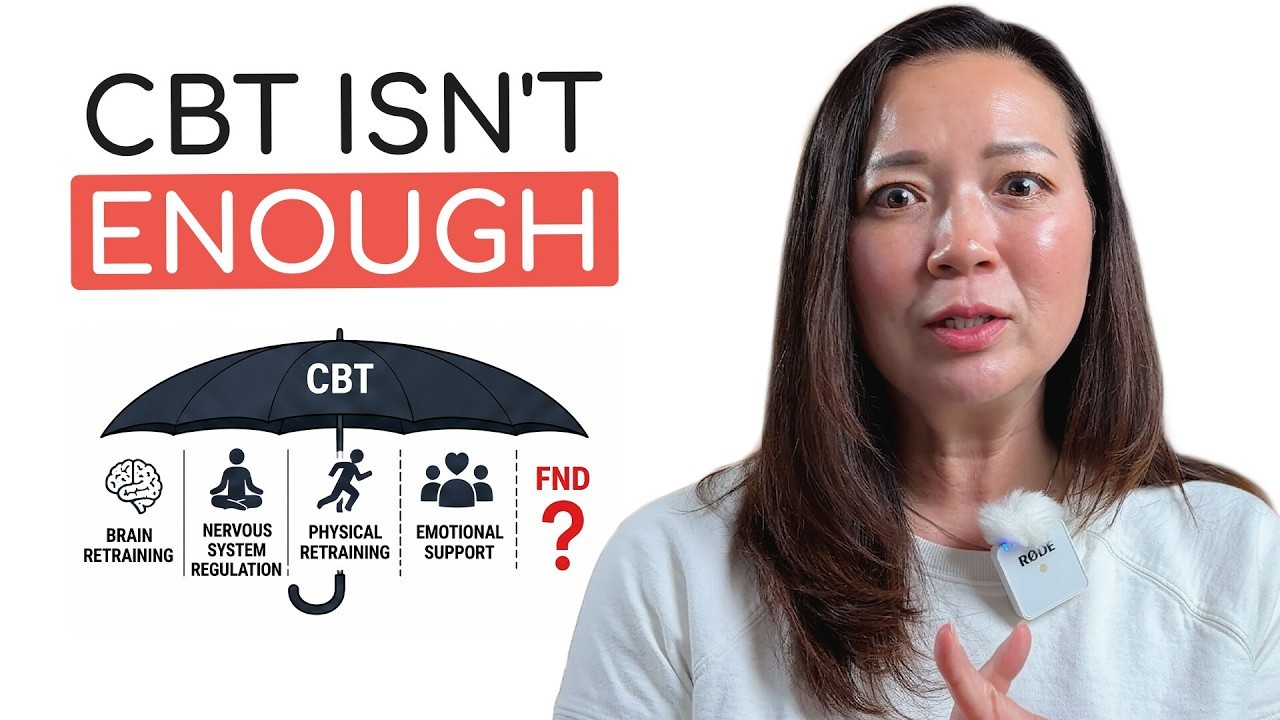
What a Harvard Review Revealed About Full FND Recovery — And Why CBT Alone Keeps Families Stuck
A 2023 Harvard Review of Psychiatry study found that 63 to 95% of children with FND achieve full symptom resolution when all three layers of recovery are addressed — not just CBT alone. Here's what that means for your family.
Read more

The Neuroscience of the Teenage Brain: Why Your Reward System Might Need an Upgrade
Neuroscientist Dr. Adriana Galván's research reveals why the teenage brain responds to rewards more intensely than adults — and Dr. Jin Lee explains how parents can use this science to build a reward system that actually works for teens with FND.
Read more

Can You Really Retrain Your Teen's Brain? What Neuroplasticity Means for FND Recovery
Dr. Lee breaks down the science of neuroplasticity and explains why the teenage brain is uniquely positioned for FND recovery — plus three practical strategies parents can start using.
Read more