
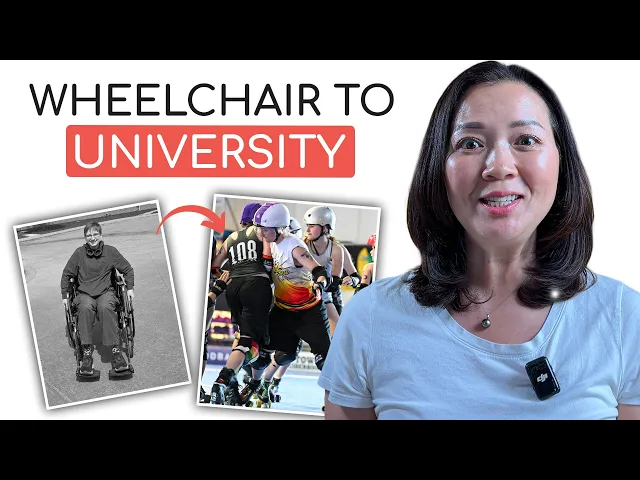
From Wheelchair to College: How One Family's Entire Life Changed After 7 Years of FND

Dr. Jin Lee, PsyD
Seven years. Countless doctors. A school that called ambulances. A teenager who was told to crawl back to his desk. A mom who couldn't leave her phone at the gym.
This is the story of River and his mom Christy — and it doesn't end in that dark place.
Nine months after joining Teen FND Academy, River had stopped using a wheelchair, walked across the graduation stage, returned to competitive roller derby at the adult level, and was preparing to leave home for university. And Christy? She finally started tossing her phone by her shoes at the gym without a second thought.
But this isn't just a story about one teen's progress. It's a story about what happens when an entire family learns a different way to approach recovery — and gets their life back in the process.
As you take in their story, notice something: it's not just River who changes. Watch how Christy changes, too. Watch how their relationship transforms. Because what families often find is that recovery isn't just about the teen with FND. It's about the whole family.
Key Takeaways
Recovery from FND can happen even after years of searching for answers — River's family spent 7 years before finding a framework that worked
A parent's nervous system work is just as important as the teen's — Christy's shift from hovering to stepping back was a critical part of recovery
Small functional wins build momentum — River's first step was simply using the wheelchair a little less, and it grew from there
Knowing about the extinction burst in advance helped this family stay the course when symptoms temporarily intensified
Recovery goes far beyond symptom reduction — River regained independence, confidence, relationships, and a future he couldn't see before
Seven Years of Searching — And Getting Smaller
River's FND symptoms started subtly during karate — legs that wouldn't stay straight during push-ups, shaking that slowly spread into everyday activities. Over seven years, things progressed from frustrating to debilitating.
There were hospital visits where a doctor literally dropped him on the floor. A teacher who told him to crawl back to his desk while classmates watched. A classroom incident that triggered ambulance calls River didn't want or need.
For Christy, life shrank right alongside River's. She stopped going to the gym. She couldn't be away from her phone. Every decision filtered through one question: What if something happens and I'm not there?
The answers they received from the medical system ranged from dismissive to dehumanizing. As Christy described it, they were repeatedly told some version of "it's all in your head" — until one psychiatrist finally validated their experience and acknowledged that what River was going through was real.
The Turning Point — And River's Skepticism
When Christy found Teen FND Academy, River wasn't on board. He actually walked out of the entrance interview.
And honestly? That's completely normal. What families often see is that after years of dead ends, teens are understandably guarded. They've been told too many times that something will help, only to be let down.
But River came back. And when he watched the first module, something clicked. He ended up watching all of the modules in that section because, in his words, it was making sense to him.
The First Win Was Small — And That's the Point
River's first step wasn't dramatic. He simply tried to use the wheelchair a little less. He'd try standing more often — and found that about 40% of the time, he could actually do it. He started walking the wheelchair back to the office himself.
By December — just a couple of months into the program — River used a wheelchair for the last time.
What's important to understand is that this didn't happen because symptoms magically disappeared. It happened because River was building new patterns, one small functional win at a time.
When Things Got Worse Before They Got Better
There was a phase where new symptoms popped up — River's hands started shaking out of the blue. This is what's known as an extinction burst, and it can feel terrifying if you're not expecting it.
But because the family had learned about this ahead of time, they were able to stay the course. As River put it: knowing it was going to happen made all the difference. Instead of panicking, they could say, "She told us this would happen before it got better — so we're good."
What Changed for Christy
One of the most powerful parts of this family's story is Christy's transformation.
She went from someone who couldn't leave her phone at the gym to someone who tosses it by her shoes without thinking. She went from hovering and asking "Are you okay?" every few minutes to giving River space to manage his own experience.
This shift didn't come naturally. Christy had to do her own work — learning to recognize that her anxiety was her anxiety, not necessarily a signal that something was wrong. She learned to connect before correcting, to listen before jumping in with solutions, and to let River tell her what kind of support he actually needed.
As she described it, the parent-focused portion of the program was critical — not just for River's sake, but for her own. She even extended their time in the program, joking that at this point, it's really for her.
Where They Are Now
River graduated high school and walked across the stage — complete with a little heel-click jump. He's heading to university in another province, living in residence with three roommates. He made an adult charter roller derby team alongside former Team Canada players. He's running a summer camp. He's going camping.
Christy is worrying about normal parent things — like her kid not calling because he got distracted hanging out with friends. She's sleeping through the night again. The dark circles under her eyes are from Netflix, not from 3 a.m. Google searches desperately looking for help.
As Christy shared, it's amazing how much you adapt without realizing it — and how freeing it is to look back and see just how far you've come.
What This Story Means for Your Family
River and Christy's journey didn't follow a straight line. There were setbacks, skepticism, and moments of real fear. But by learning new skills and practicing them consistently — both teen and parent — their confidence, independence, and future returned to them.
What families I've worked with often discover is that recovery is about so much more than managing symptoms. It's about reclaiming function, agency, and the life that FND made feel impossible.
If this story resonated with you, I encourage you to explore the resources available at teenfndacademy.com. Whether you're just starting to understand FND or you're ready for a more structured path with coaching and a supportive community of families walking this journey together, there's a place for you.
Share this
Client Testimonial
Comments
>No comments yet. Be the first!