
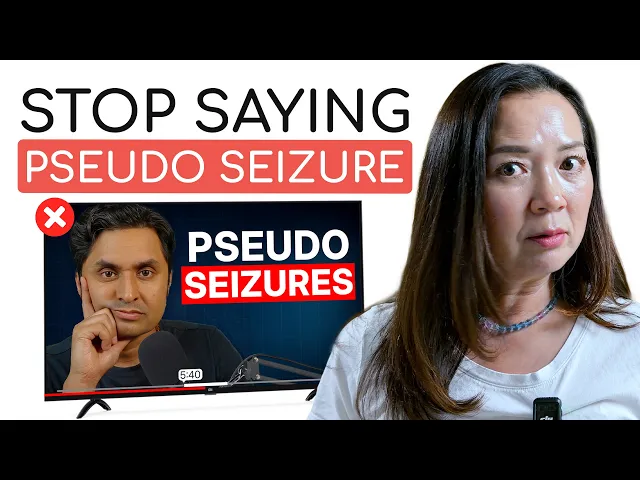
A Harvard Psychiatrist Gets This Wrong About Functional Seizures — Here's What Parents Need to Know

Dr. Jin Lee, PsyD
Your teen collapses. They start shaking or go unresponsive, and you do the only thing a parent can do — you hold them and try to make it stop. Then the testing comes back clean. No epilepsy. Nothing. And someone in a white coat says the word "pseudo seizure," and your teen looks at you and asks: do they think I'm faking this?
When a well-known Harvard-trained psychiatrist recently described a case of functional seizures in a short video clip, Dr. Lee was genuinely glad to see a platform that large covering FND. But packed into that brief clip were three things she spends her professional life helping families understand — what these episodes should actually be called, whether a bedside observation can tell you anything about faking, and what parents are supposed to do while it's happening.
The distinctions matter more than most people realize. And one idea in particular changes everything about how families respond: attention can reinforce a symptom without the symptom ever being for attention.
Key Takeaways
Functional seizures are real and involuntary — the term "pseudo seizure" is outdated and misleading
A symptom changing with attention does not prove someone is faking or consciously controlling it
Parents' panicked, physical responses during episodes can unintentionally reinforce the symptom cycle
Effective recovery involves helping the whole family shift from fear and rescue to safety and calm confidence
Three Categories That Get Collapsed Into One
When a teen has a seizure-like episode, there are actually three distinct categories that need to be distinguished — and collapsing them together causes real harm.
Epileptic seizures are caused by abnormal electrical activity in the brain. They are involuntary. Functional seizures are part of Functional Neurological Disorder (FND). They can involve shaking, convulsing, stiffening, falling, or unresponsiveness. They look like epileptic seizures, but they are not caused by epileptic electrical activity — and they are also involuntary. The person is not consciously making them happen.
Then there are intentionally produced symptoms — malingering (where someone consciously fakes or exaggerates symptoms for an external benefit) and factitious disorder (where symptoms are intentionally falsified without an obvious external reward). Functional seizures are neither of these.
The correct question is never "Is this real or fake?" The question is whether the episode is epileptic, functional, or intentionally produced. Those are very different situations.
Why "Pseudo Seizure" Needs to Be Retired
The term "pseudo seizure" is outdated — and not just a little outdated. Many people hear "pseudo" and assume it means fake. That assumption can be devastating for teens who are already scared, confused, and searching for someone to believe them.
What we often see is that this single word — pseudo — can derail a family's trust in the medical process before recovery even begins. The preferred terms today include functional seizures, non-epileptic seizures, dissociative seizures, or psychogenic non-epileptic seizures (PNES). For clarity and accuracy, "functional seizures" is the most straightforward.
Can You Diagnose Functional Seizures by Observation Alone?
Behavioral observations — like noticing how a symptom changes with attention, distraction, or the environment — can provide useful clinical information. But one observation is not enough to make a diagnosis, and a symptom changing does not prove that the person is consciously controlling it.
This is what makes FND confusing, even for clinicians. An involuntary symptom can still be influenced by attention. Think of a panic attack — no one chooses to have one, but hyperfocusing on every physical sensation can make it stronger. Shifting attention may help it settle. That doesn't mean the person was faking.
The same principle applies to functional seizures. Proper diagnosis requires a full history, understanding the pattern of a person's typical episodes, a neurological evaluation, and often recording an episode during video EEG monitoring. This is a neurological diagnosis — not something that can be determined from a short clip or a single bedside test.
What Parents Should Know About Responding During an Episode
When your child collapses or starts shaking, your instinct as a caring parent is to protect them — to hold them, to make it stop. That reaction is completely understandable, and it comes from a place of deep love.
But once functional seizures have been properly diagnosed, a panicked and highly physical response can become part of the cycle that maintains the episodes. What families I've worked with often discover is that the nervous system can learn that the episode is dangerous and requires rescue every time — and that learning happens without any conscious intent from the teen.
This is where reinforcement is often misunderstood. Reinforcement does not mean the teen is faking the symptom for attention. The symptom is involuntary — and it can still be shaped by what happens before, during, and after it. Attention can reinforce a symptom without the symptom being for attention.
Riding the Wave With a Safety Mindset
So what should the response look like? Here's what this process is built around:
Maintain reasonable safety — you don't need a thousand pillows and bubble wrap
Stay calm and reduce unnecessary stimulation
Avoid crowding, shouting, or repeatedly asking questions like "Can you tell me who you are?"
Do not restrain your teen unless immediate safety requires it
Allow the episode to pass and support your teen in returning to normal activity as soon as reasonably possible
The message you're sending is: You're safe. I'm here. Your nervous system can move through this, and you are capable of handling it.
This does not mean ignoring, punishing, or abandoning your child. It means moving the whole family from fear and rescue toward safety and recovery. Parents often need coaching to respond this way — especially after months of believing every episode was a medical emergency. That fear becomes part of the pattern too, and there is some undoing to do.
Your Family Can Move Through This
Changing the family's response is really about helping everyone — teen and parents alike — shift from chaos to understanding, and from understanding to practice, and from practice to living life beyond FND.
If your family is navigating functional seizures and you're looking for a structured path forward, learn more about how Teen FND Academy helps families do exactly that at teenfndacademy.com.
Share this
Comments
>No comments yet. Be the first!
Related Post
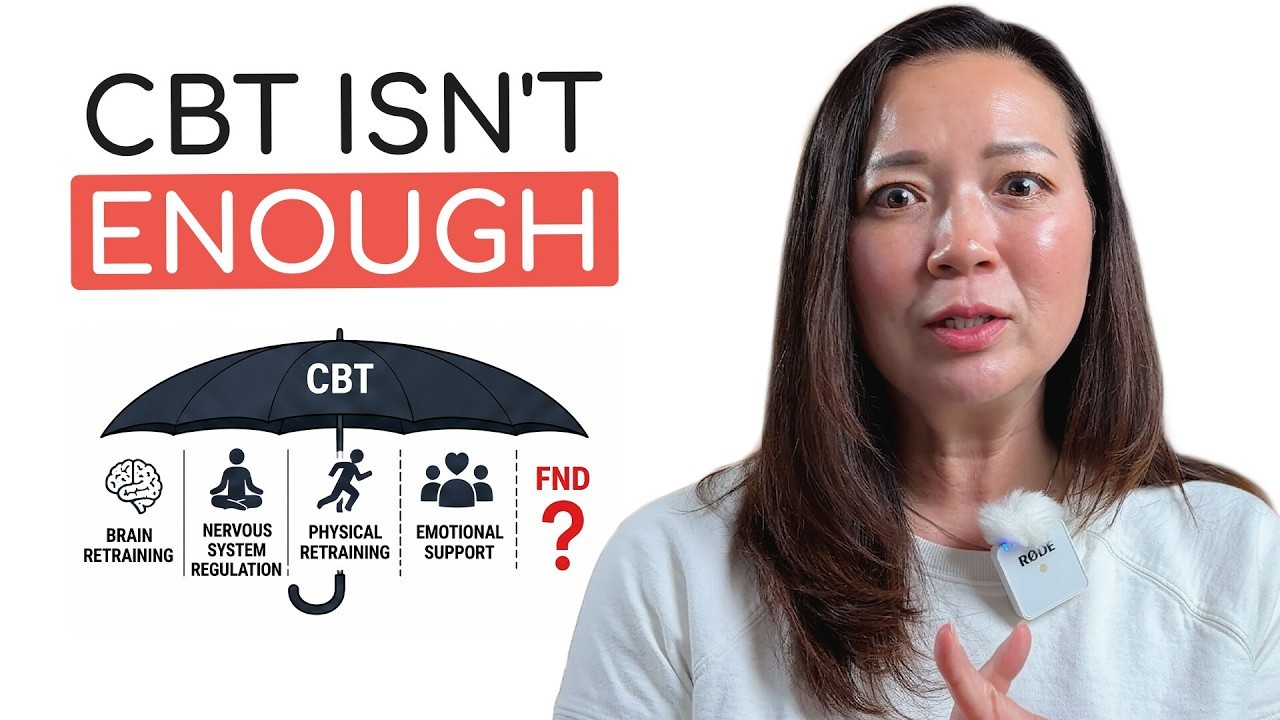
What a Harvard Review Revealed About Full FND Recovery — And Why CBT Alone Keeps Families Stuck
A 2023 Harvard Review of Psychiatry study found that 63 to 95% of children with FND achieve full symptom resolution when all three layers of recovery are addressed — not just CBT alone. Here's what that means for your family.
Read more

The Neuroscience of the Teenage Brain: Why Your Reward System Might Need an Upgrade
Neuroscientist Dr. Adriana Galván's research reveals why the teenage brain responds to rewards more intensely than adults — and Dr. Jin Lee explains how parents can use this science to build a reward system that actually works for teens with FND.
Read more

Why "Validating Feelings" Backfires: What FND Parents Need to Know About Holding Space
Validating your teen's feelings during an FND flare sounds like the right move — but if your mindset is still about making it stop, it can backfire. Dr. Jin Lee breaks down what holding space actually looks like for FND families.
Read more