
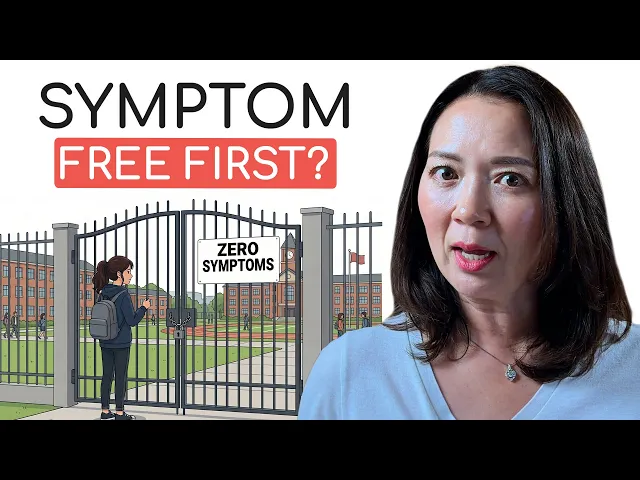
3 Signs Your Teen With FND Is Actually Getting Better (Even When Symptoms Are Still There)

Dr. Jin Lee, PsyD
Your teen is back at school, but they're still having symptoms. They're still exhausted when they come home. Every morning is still a battle.
Does that mean recovery isn't working?
Not necessarily. One of the trickiest things about Functional Neurological Disorder is that progress doesn't always look the way parents expect it to. Families often measure recovery by counting symptoms — how many, how severe, how long they lasted. But what families I've worked with often discover is that the earliest signs of real progress don't start with the teen's symptoms at all.
They start with the parents.
Dr. Jin Lee, pediatric psychologist and founder of Teen FND Academy, walks through three specific signs that tell her a family is genuinely moving in the right direction — even when the teen is still symptomatic. These signs build on each other and reveal a pattern that's far more meaningful than any single good or bad day.
Key Takeaways
Symptoms are the smoke, not the fire. Measuring FND recovery by symptom count alone can keep families stuck in the wrong loop.
How you respond to a flare matters more than the flare itself. Your teen's brain is collecting safety data every time the adults around them respond with calm and confidence.
A consistent plan changes everything. When teens, parents, and school all follow the same plan, it creates the predictability your teen's brain needs to begin retraining toward recovery.
Sign 1: You Understand What You're Looking At Differently
When a smoke alarm goes off, it's loud, uncomfortable, and impossible to ignore. That's exactly what FND symptoms feel like for a family.
Naturally, symptoms become the thing everyone watches. How many did they have today? Were they worse than yesterday? How long did they last?
Without realizing it, the entire family can start judging recovery based on symptoms alone — the smoke. But with FND, the actual fire is the miscommunication between the brain and the body. Symptoms are the sign that this miscommunication is happening.
Here's what this means in practice: your teen might still have symptoms while getting out of bed more consistently. They might still have symptoms while attending more school days. They might still have symptoms while becoming more independent.
The first sign of progress is that you understand this distinction. Symptoms matter, yes — but they don't tell you the whole recovery story.
Sign 2: Your Response No Longer Turns Into a Five-Alarm Emergency
Once you understand what the symptoms actually represent, something else starts to shift — how you respond when that smoke alarm goes off.
Imagine a smoke alarm sounds and everyone in the house starts screaming, panicking, running around. The message that sends is clear: danger.
Now imagine the same alarm goes off, but the adults understand what's happening. They remain calm. They know what to check. They know what to do next. The alarm sounds exactly the same, but the response is completely different.
What we often see early in the FND journey is a chain reaction. A teen's symptoms increase at school. The teacher gets scared. The nurse gets scared. The school calls the parents. Everyone is asking, "Do they need to go home? Do we need to call an ambulance?" And suddenly, the symptoms are running the entire show.
Compare that with a family further along in recovery. The same symptoms increase — but the teen recognizes what's happening, the adults know how to respond, and nobody turns it into a crisis. There's calm. There's confidence. And life keeps moving.
Here's the powerful part: the symptoms may not have changed on the surface. But the response changed completely. And that matters enormously, because your teen's brain is collecting data. Every time the adults respond with calm instead of panic, their brain receives evidence that the symptoms are not dangerous — that they are actually okay. This sense of safety is the foundation for retraining the brain and body toward recovery.
Sign 3: There Is a Plan — and Everyone Follows It Consistently
The calm, confident response only works long-term if it's backed by a clear plan that everyone follows. That means the teen knows the plan, parents know the plan, and the school knows the plan.
One of the biggest problems families run into is that everyone responds differently depending on the day. Symptoms flare on Monday and the teen goes home. They flare on Wednesday and the teen goes to the nurse. On Friday, mom gets called. The following week, a different teacher sees the symptoms and thinks it's an emergency.
There's no consistency. And when nobody knows what happens next, it's very difficult for a teen's brain to learn what to do when symptoms show up.
A recovery plan creates predictability. It answers questions like: What do parents do? What does the school do? When does the teen return to what they were doing before?
The exact plan looks different for every family, but the principle is the same — everybody knows the plan and everybody follows it consistently. This is the environment where teens can actually practice the skills they're learning and gradually begin managing more on their own.
What Real Improvement Looks Like
So what is the new definition of improvement in FND recovery? It's function while using skills and strategies.
This isn't about pushing beyond limits or pretending everything is fine. It's about returning to school while using planned strategies. Reconnecting with friends while using those strategies. Getting back to activities and independence with pre-planned skills in place.
These three signs — understanding symptoms differently, responding with calm, and following a consistent plan — build on each other. Together, they create the conditions where real, lasting progress happens.
If you're thinking, "That sounds great, but we don't actually have a clear plan yet" — then you've just identified something your family needs. That's a starting point, not a setback.
To learn more about how Dr. Lee helps families build these plans and move through FND recovery, visit teenfndacademy.com.
Share this
Comments
>No comments yet. Be the first!
Related Post
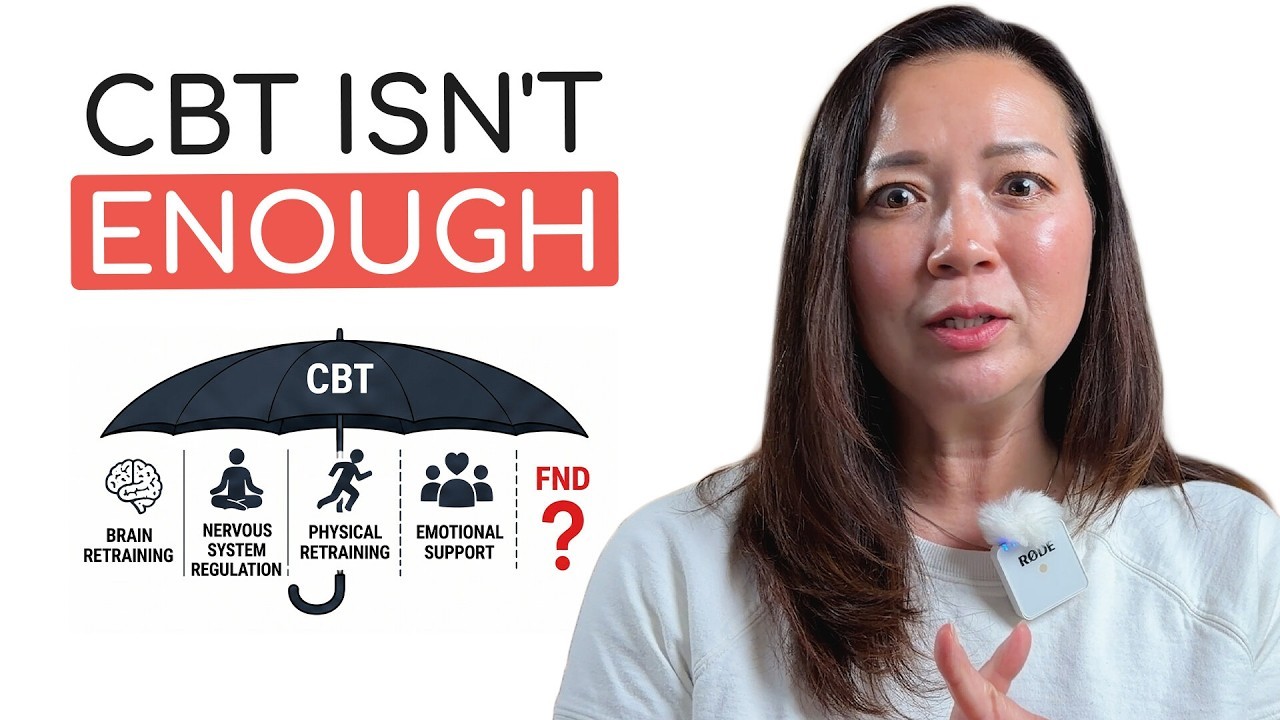
What a Harvard Review Revealed About Full FND Recovery — And Why CBT Alone Keeps Families Stuck
A 2023 Harvard Review of Psychiatry study found that 63 to 95% of children with FND achieve full symptom resolution when all three layers of recovery are addressed — not just CBT alone. Here's what that means for your family.
Read more

Why "Validating Feelings" Backfires: What FND Parents Need to Know About Holding Space
Validating your teen's feelings during an FND flare sounds like the right move — but if your mindset is still about making it stop, it can backfire. Dr. Jin Lee breaks down what holding space actually looks like for FND families.
Read more

6 Sleep Rules Every FND Parent Should Know
Sleep isn't a nice-to-have for teens with FND — it's the nightly nervous system reset that makes everything else in recovery work better. Here are six practical steps to help your teen build real sleep habits.
Read more